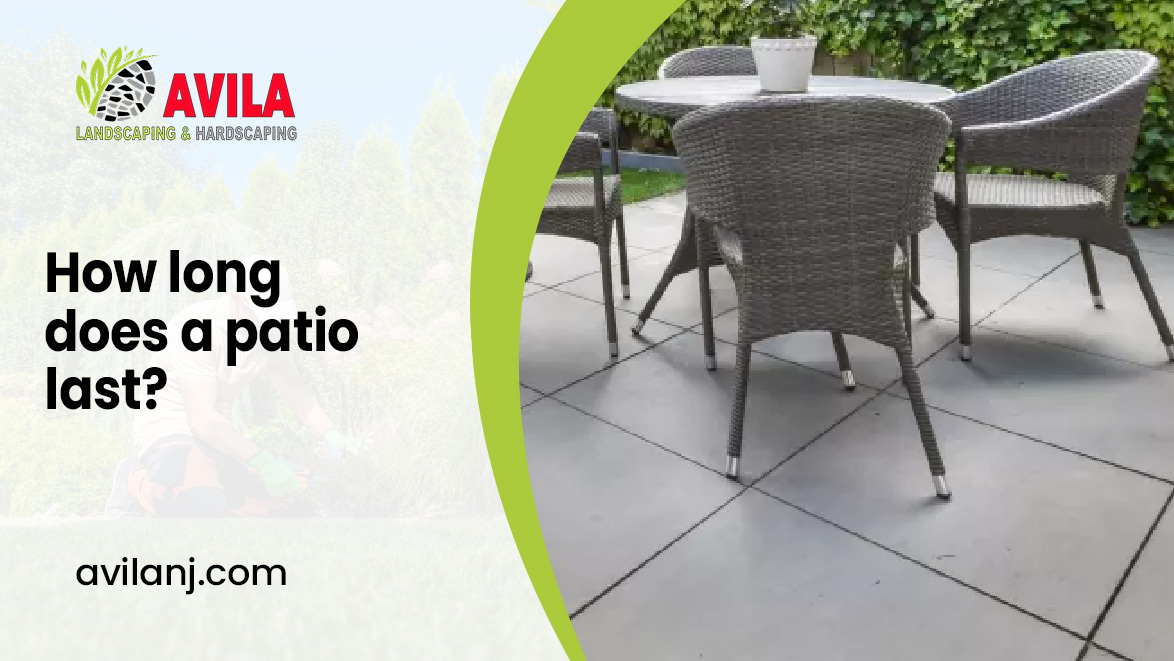
One of the most used components of any outdoor space is a patio. It withstands everyday use, changing weather conditions and years of exposure. Anything built outdoors, it does not last forever. The right material, good installation and basic upkeep all play a big role in how many years you get from it.
Core Takeaways
- Most patios last between 25 and 100 years depending on the material and care.
- Natural stone has the longest life and requires the least maintenance, often for 100 years or more.
- A well-sealed and maintained concrete patio will last for 25 to 50 years.
- The two most common causes of early patio failure are poor drainage and poor installation.
- Cleaning, sealing and quick repairs give many years of life to any patio surface.
Average Lifespan of Different Patio Materials
The most important element that determines the longevity of your patio is the material you use. Certain materials are better suited to weather conditions and traffic than others.
Concrete Patios
Concrete patios can endure for 25-50 years in most circumstances. They are durable, inexpensive and are readily installed over large surfaces. The surface is well able to withstand everyday use and furniture. Sealing every few years helps to keep the moisture out and keeps surface cracking from being a greater issue over time.
Paver Patios
With proper maintenance, a paver patio can last for 25 to 50 years or longer. The biggest benefit of using individual pavers is that they can be replaced without having to replace the entire surface. That certainly makes repairs way less costly and difficult than a cracked concrete slab.
Natural Stone Patios
Natural stone is the most long-lasting of all the patio materials. With proper care and maintenance, granite, bluestone and slate can serve for up to 50–100 years. The material is very dense, resistant to weather and withstand freeze-thaw cycles. Although the initial investment is higher, it will last a long time and is a great long-term choice for any outdoor space.
Brick Patios
With appropriate maintenance, brick patios can last for 25 to 50 years. Brick is relatively resistant to the effects of freezing, thawing and improves with age. Older Brick is denser and more durable than new bricks which can remain strong and stable for many years.
What Factors Affect the Lifespan of a Patio?
The material is just a part of the story. There are several other factors that affect the amount of time you can expect your patio to last.
Installation Quality
Regardless of the material, a patio constructed on a poor or weak foundation will not last long. During installation, proper base depth, compaction and preparation of the drainage are all critical. Cutting corners at this stage leads to shifting, sinking and cracking that shows up much sooner than it should.
Drainage and Water Management
The most serious damage to any patio surface is caused by water. Water is not able to drain, it accumulates under and around the surface, easing the base and leading to the base being cracked. Proper slope away from the house and good drainage channels keep water moving away from the structure consistently.
Climate and Weather Exposure
Harsh winters, heavy rain and intense summer heat all wear patios down faster than mild climates do. Freeze-thaw cycles are particularly destructive because water expands when it freezes, and from the inside, it pushes materials apart. In fact, selecting a material appropriate to your climate will make a significant difference in the patio’s overall lifespan.
Material Quality
Good-quality materials just work better and last longer under the same conditions. Low-grade concrete or thin pavers tend to crack easily when pressure is applied and when exposed to the elements. A little investment in quality materials in the first place will save you a ton of money in repair and replacement costs later on.
Signs Your Patio May Need Repairs or Replacement
These are some of the problems you should be able to see quickly to prevent major expenses in repairs and ensure the safety of your outdoor space.
Cracks and Surface Damage
Small hairline cracks can be filled and sealed without much trouble. Any cracks that are wide or deep and recur generally point to an underlying problem that must be addressed before the surface can be held long-term.
Uneven or Sunken Areas
A base that has moved or settled under its structure is indicated by low spots and uneven surfaces. This causes tripping hazards and provides water to puddle and cause additional damage. If areas of the patio become sunken, it is best to take care of them right away before the problem expands to the rest of the patio.
Loose Pavers or Bricks
Individual pavers or bricks that rock or shift have lost their underlying support. They can be easily reset as a repair if caught in time. When left untreated, neighboring pavers also shift and the simple repair work ends up being quite a bit bigger and costlier.
Drainage Problems and Water Pooling
Rain puddles on the patio surface are a definite red flag. It indicates that the slope or drainage is not working and the base is probably being saturated periodically. Early drainage fixes will prevent much bigger structural damage under the roof.
How to Make Your Patio Last Longer
Maintaining a patio does not need to be a costly and time-consuming process. Certain routine habits will extend the life of the surface.
- Clean the patio to prevent the accumulation of moss, dirt and debris.
- Seal concrete and pavers every 2-3 years to prevent water, stains and freeze-thaw damage.
- Fill cracks with cement or caulk so water can not reach the base level
- Repair small cracks and loose pavers promptly, before they get larger due to movement and water.
- Ensure there is never any standing water on or around the patio.
- Do not use harsh chemical cleansers for cleaning that will degrade the surface seal over time
Conclusion
A well-built patio is one of the most durable features any outdoor space can have. When the right material is used, installed properly and maintained for years can protect your investment. It doesn’t matter if you select concrete, pavers, natural stone or brick; the principles stay the exact same. Take care of the surface, manage drainage well and fix small problems before they grow. When you’re looking to construct a patio that will last for years, the professionals at Avila Landscaping are here to help you pick the appropriate material and make sure it gets installed correctly from the start. A patio built well today can easily last decades or even a century and that is exactly what how long does a patio last comes down to when the work is done right.
Frequently Asked Questions
How long does a concrete patio typically last?
A concrete patio lasts between 25 and 50 years in most conditions. If not properly installed or well maintained, that lifespan can be reduced considerably.
What type of patio material lasts the longest?
Natural stone is one of the most popular patio materials. With proper maintenance, granite and bluestone can last 50-100 years and more. The higher upfront cost is offset by the dramatically longer lifespan and lower long-term maintenance requirements overall.
What factors affect a patio’s lifespan?
The longevity of a patio depends on installation quality, drainage, climate, material quality and usage. There are two most frequent causes of premature failure of patios: poor drainage and poor base. Most of these issues can be effectively prevented with good installation from the outset.