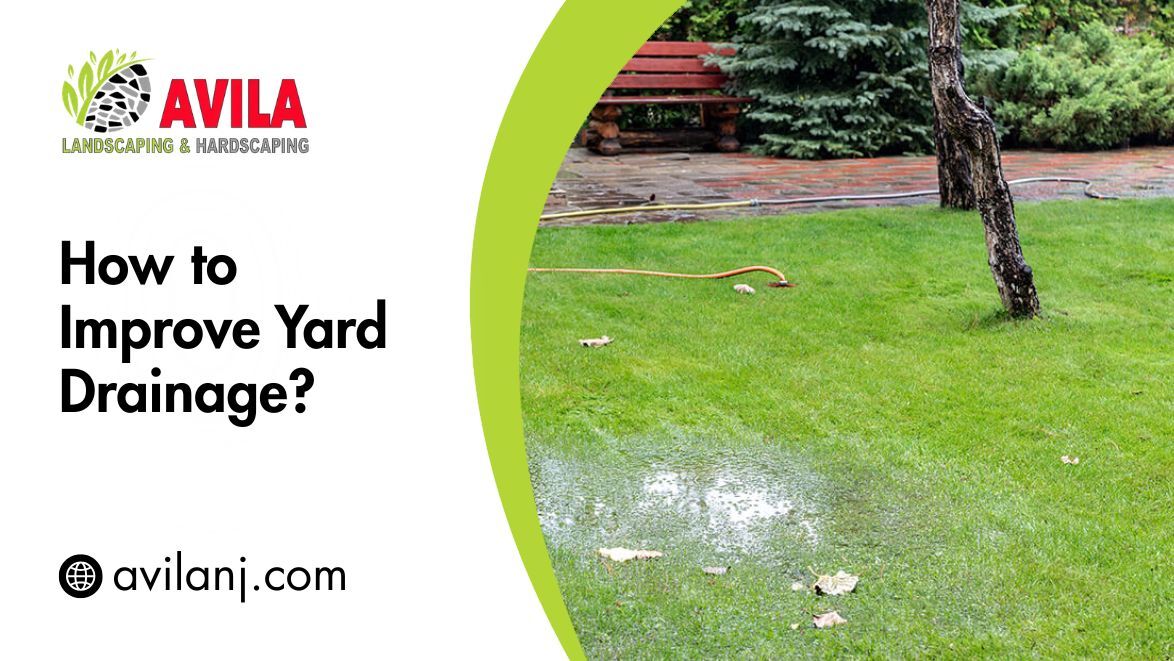
The first step to improving yard drainage is to figure out where the water is collecting. The most common causes are compacted soil, poor grading, clay-heavy ground and blocked drainage systems. When you know the cause the solution is obvious. Some drainage problems are easy to fix with DIY. Others require a professional.
Core Takeaways
- Yard drainage improvement begins with diagnosing the cause before you spend any money on a solution that may not address the real problem.
- There are 4 signs of a drainage problem in a yard that you need to address and they are: standing water, wet soil, erosion, and water pooling around the foundation.
- Most residential drainage problems are caused by compacted soil, poor grading and clay-heavy ground. The rest are due to blocked or missing drainage systems.
- Depending upon the severity and location of the problem, the best solutions are French drains, catch basins, regrading, and dry creek beds.
- Small drainage problems are DIY jobs. If you’re planning any major regrading or installing underground pipes, it’s worth calling in a professional.
Signs Your Yard Has a Drainage Problem
Some drainage problems are obvious. Others show up slowly and get worse before most people realize what’s happening.
- Standing water for more than a day or two after a rain means the ground isn’t absorbing or moving water like it should.
- If the ground stays soft for days after it rains, if it is soggy or waterlogged, then the land is saturated and has no way to get rid of the extra water.
- If there are signs of erosion and bare spots, where the rain washes the soil away, the water is moving across the surface faster than the land can absorb it.
- The worst sign is water gathering near the foundation. If the foundation is constantly wet, water will leak in, the building will be structurally damaged and mold will grow.
What Causes Poor Yard Drainage
Drainage problems come from a handful of recurring causes. Knowing which one applies points you toward the right fix.
Compacted Soil
Compacted soil has no room for water to penetrate so it sits on the surface or runs off. High traffic areas like lawn edges and spots where vehicles park are where compaction shows up most. Aeration helps with mild compaction. Severe compaction needs more significant intervention.
Poor Grading and Slope
Yards that slope toward the house funnel water directly to the foundation. A properly graded yard slopes away from the house at a minimum of six inches over ten feet. When that slope is wrong or flat water has nowhere to go except where you don’t want it.
Clay Heavy Soil
Clay soil soaks up water slowly and drains even more slowly. In your yard if you have a lot of clay, water will sit on top for a long time after a rain. The ground just can not process the water fast enough.
Blocked or Missing Drainage Systems
Existing drainage infrastructure clogged with debris or a yard that was never set up with drainage creates obvious problems. Downspouts discharging too close to the house, clogged catch basins and deteriorated underground pipes all cause water to end up where it shouldn’t.
How to Improve Yard Drainage
The right solution depends on what’s causing the problem and how severe it is.
Regrade the Yard
Regrading changes the slope of the yard to direct water away from the house toward an appropriate outlet. Significant grading issues usually require professional equipment. Minor slope corrections in smaller areas can be done with topsoil and a rake but anything beyond a small patch is worth hiring someone for.
Install a French Drain
A French Drain is a trench filled with gravel and a perforated pipe to carry subsurface water away from the area in question. Great for yards that always have wet spots or where water sits on the surface.
Add a Catch Basin
A catch basin is an underground collection box with a grate on top that captures surface runoff and directs it into an underground pipe system. Works great for low spots in the yard that always pool water. Works well on paved surfaces and at the bottom of slopes, where runoff speeds up.
Create a Rain Garden
A rain garden collects and absorbs runoff from hard surfaces like roofs and driveways. Native plants with deep root systems absorb water quickly. Works well for moderate runoff without installing underground infrastructure. Not suitable for severe drainage problems but a solid solution for manageable situations.
Aerate the Soil
Core aeration pulls plugs of soil out of the lawn creating channels for water to penetrate. Effective for mild compaction in lawn areas. Usually done with a rental aerator in spring or fall. Doesn’t solve grading problems or clay soil issues on its own but helps as part of a broader approach.
Install a Dry Creek Bed
A dry creek bed is a decorative rock-lined channel that directs surface water across the yard to an outlet point. It handles sheet flow during rain and looks intentional rather than just functional which is one reason it’s popular in residential landscapes. Works well for moderate drainage issues on properties with enough space to route water effectively.
Extend Downspouts Away From the Foundation
Downspouts discharging right at the foundation wall dump thousands of gallons of water directly against the house during rain. Extending them at least ten feet from the foundation with a flexible extension or underground pipe removes a significant source of foundation moisture. One of the cheapest fixes available and one of the most overlooked.
How to Choose the Right Drainage Solution for Your Yard
What solution makes sense depends on the severity of the problem, yard layout and budget. First, you have the problem of standing water next to the foundation. Ignoring this can get very expensive. Fix with a downspout extension or minor regrade. Persistent soggy areas away from the house are usually a problem with a French drain or catch basin. A dry creek bed or rain garden often works well for surface runoff across a large yard. If you aren’t sure, get a professional evaluation before you spend money on the wrong repair.
When to Call a Professional
Regrading beyond a small area, installing underground pipe systems and anything involving excavation near utilities or the foundation is professional territory. Getting the grading wrong makes the drainage worse. An underground pipe that isn’t properly sloped doesn’t drain. Both mistakes cost more to fix than hiring someone competent upfront would have. Water intrusion in a basement or crawl space is a professional call every time.
Conclusion
Poor yard drainage can ruin foundations, kill grass and make outdoor areas unusable when it rains. The first step for yard drainage improvement is to determine the cause, whether it’s grading, soil type, a blocked system or missing infrastructure. After that find the right solution for that cause. If you don’t know what is causing the problem or if the fix is going to require a lot of earthwork, call Avila Landscaping for a professional evaluation and get it fixed right the first time.
Frequently Asked Questions
How much does it cost to fix yard drainage?
Simple fixes like downspout extensions cost under a hundred dollars. French drains run between one thousand and six thousand depending on length and complexity. Full regrading projects vary based on yard size. Get a professional quote for anything beyond minor surface corrections.
Does yard drainage affect home value?
Yes. Persistent drainage problems show up in home inspections and are red flags for buyers. A yard with good drainage and no water intrusion issues is a selling point. Visible pooling or foundation moisture concerns reduce value and can complicate a sale.
Can poor yard drainage damage a foundation?
Yes and it’s one of the more expensive consequences of ignoring the problem. Water pooling against a foundation creates hydrostatic pressure that causes cracks and moisture intrusion over time. Addressing drainage early costs significantly less than foundation repair later.