You’re planning outdoor hardscaping but are stuck choosing between pavers and concrete. Many homeowners get confused, pick the wrong material and face costly problems later. Your property deserves materials that last and look beautiful for years. Let’s discover whether pavers are better than concrete, what each option offers, and when to choose the right one.
| Quick AnswerNeither is universally better; each works best for different situations. Pavers excel when you want style variety, easy repairs and long-term durability against ground movement. They cost more upfront but last longer and look better. Concrete works best when budget is tight, installation speed matters or you need large, simple areas. Choose pavers for patios, pool decks and high-visibility areas. Choose concrete for driveways, large commercial spaces or budget-limited projects. |
What Are Pavers?
Pavers are individual pre-made stones or bricks used for outdoor surfaces like driveways, patios and walkways. They come in concrete, clay or natural stone materials with various shapes, colors and textures. Each piece is placed separately on a sand or gravel base, allowing flexibility and individual replacement. Professional installation requires proper base preparation, joint spacing and edge restraint for lasting results.
What Is Concrete?
Concrete is a mixture poured as a single continuous slab that hardens into a solid surface. It combines cement, water, sand and gravel poured over a prepared base then smoothed and cured. Once cured, it forms one unified surface without joints or gaps. Concrete can be plain, stained, stamped or stenciled for decorative effects but remains one continuous piece.
Pavers vs. Concrete: Key Differences at a Glance
| Feature | Pavers | Concrete |
| Material Type | Individual stones/bricks (concrete, clay, natural stone) | Liquid mixture poured as a continuous slab |
| Installation Method | Pieces laid separately on sand/gravel base with joints | Poured wet then cured into one solid piece |
| Cost Range | $15-$40 per square foot installed | $6-$18 per square foot installed |
| Durability | 25-50+ years with proper installation | 20-30 years before significant cracking |
| Repair Process | Replace individual damaged pavers easily | Cut out entire section and repour messy repair |
| Design Options | Hundreds of colors, shapes, textures, patterns | Limited to stamps, stains, colors or plain gray |
| Ground Movement | Flexes with soil; shifts without cracking | Cracks when soil moves or freezes |
| Installation Time | 3-7 days depending on size complexity | 1-3 days plus 7-10 days curing time |
| Maintenance | Sweep joints; reapply sealant every 2-3 years | Clean surface; reseal every 3-5 years |
| Curb Appeal | High attractive custom look stands out | Moderate functional but less distinctive |
| Weed Concerns | Weeds grow between joints; need control | Fewer joint areas, so weed growth is typically lower |
| Best Applications | Patios, pool decks, walkways, decorative areas | Driveways, large commercial simple areas |
Advantages of Pavers
Pavers offer multiple benefits that make them superior for many outdoor projects. Lets explore them.
Wide Range of Styles and Colors
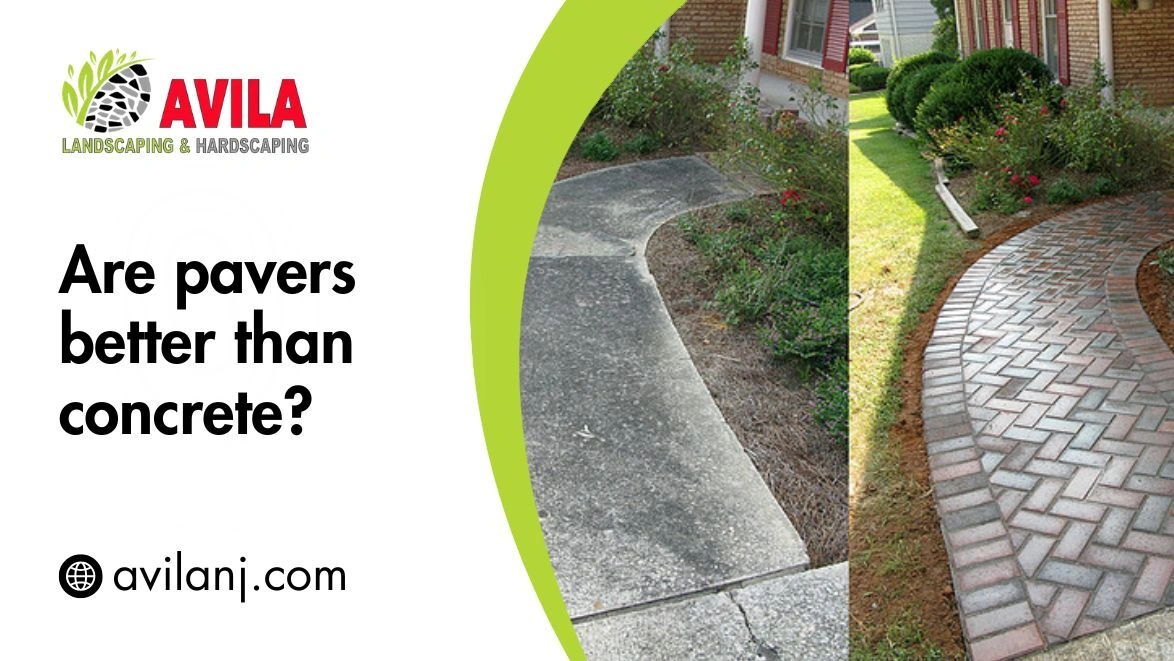
Pavers come in hundreds of colors, shapes, textures and patterns. You choose from concrete, clay or natural stone with options like rectangular, square, hexagonal or custom shapes. Stacked brick, herringbone or circular patterns create unique looks. Stamped concrete can’t match this custom variety for creating distinctive outdoor spaces. Your patio or walkway becomes a custom design featuring your style.
Easy Individual Repairs
Damaged pavers get replaced individually without affecting surrounding areas. Just lift the broken piece, add fresh sand and insert a new paver. Concrete requires cutting out the entire damaged section then repouring a messy patch that never matches perfectly. Pavers save money and time on repairs over a 25+ year lifespan. One broken paver doesn’t ruin your entire patio appearance.
Better Flexibility Against Ground Movement
Pavers flex with soil shifts, freezing and thawing and tree roots without cracking. Each piece moves independently on a sand base, absorbing ground movement. Concrete forms one rigid slab that cracks when soil moves or freezes. Freeze-thaw cycles make pavers ideal for lasting through winter without damage. Your hardscaping survives harsh weather conditions year after year.
Higher Curb Appeal
Pavers create attractive custom looks that stand out from standard concrete. Visitors notice pattern color variety and professional appearance immediately. Home value increases with beautiful hardscaping that looks expensive and custom-designed. Plain concrete looks functional but pavers make your property look upgraded and worth more. First impressions matter when guests or buyers visit your home.
Advantages of Concrete
Concrete brings real benefits for specific situations where budget, speed or simplicity matter most. Understanding these advantages helps you choose concrete when it fits your project needs better than pavers.
Lower Upfront Cost
Concrete costs $6-$18 per square foot while pavers range $15-$40. For large areas, concrete saves thousands upfront. Budget-conscious homeowners choose concrete when immediate costs matter more than long-term value. Lower price makes outdoor spaces more accessible without major upfront expense. You get functional hardscaping without breaking your budget.
Faster Installation
Concrete gets poured in 1-3 days versus pavers taking 3-7 days. Professional crews work quickly with liquid concrete versus hand-laying individual pavers. Time-sensitive projects benefit from faster completion. However, concrete needs 7-10 days curing time before use while pavers work immediately after installation finishes. Total project time might be similar depending on conditions.
Simpler Design Options
Concrete works perfectly for simple functional areas without fancy patterns. Large rectangular driveways or basic patios don’t need decorative variety. Plain stamped or stained concrete provides a clean, simple look. When design elegance isn’t a priority, concrete delivers straightforward results without complex pattern planning or custom layout needs. Simplicity works when you just need a solid surface.
Suitable for Large Areas
Concrete excels for covering massive spaces like large parking lots or expansive commercial areas. Pouring a continuous slab over 1000+ square feet is faster than laying thousands of pavers. Cost efficiency improves dramatically on large projects. However, joints in pavers allow better drainage on huge surfaces, preventing water pooling issues. Balance speed with drainage needs for best results.
Potential Drawbacks of Pavers
Pavers shine in many ways but come with real limitations you must consider. Understanding these drawbacks prevents disappointment and helps you decide if pavers fit your situation.
Higher Initial Investment
Pavers cost 2-3 times more upfront than concrete. $15-$40 per square foot requires significant budget or financing. Budget-limited projects might need concrete instead. However, pavers last longer and add more value so long-term investment often pays back through durability and increased property resale value over time. Think about total cost, not just initial price.
Weed Growth Between Joints
Weeds grow through paver joints, requiring regular control and maintenance. Sand joints trap weed seeds and moisture. You need to sweep joints annually, reapply polymeric sand and maybe use weed killer. Concrete has no joints so weeds don’t grow. Proper installation with polymeric sand reduces but doesn’t eliminate weed concerns. Regular maintenance keeps weeds under control effectively.
Longer Installation Time
Pavers take 3-7 days versus concrete’s 1-3 days for installation. Hand-laying individual pieces requires more labor time than pouring liquid concrete. Large projects extend this timeline further. However, pavers work immediately after installation while concrete needs 7-10 days curing before use. Total project time might be similar depending on weather conditions.
Potential Drawbacks of Concrete
Concrete works well for many projects but has significant limitations affecting long-term performance and appearance. Understanding these drawbacks helps you avoid costly mistakes when choosing concrete.
Cracking Over Time
Concrete cracks from soil movement, freezing and thawing, tree roots and age. Freeze-thaw cycles cause significant cracking within 10-15 years. Cracks start small then widen, letting water damage base layers. Pavers flex without cracking. Once concrete cracks, repair becomes difficult and patches never match the original surface perfectly, looking messy. Your hardscaping looks worn and outdated quickly.
More Difficult Repairs
Repairing cracked concrete requires cutting out the damaged section then repouring new concrete. The patch never matches the original color and texture perfectly. Multiple repairs create an ugly patchwork appearance. Pavers are replaced individually with new pieces that perfectly match the originals. Concrete repairs cost more time and money and look worse than paver repairs. Maintenance becomes expensive and frustrating over the years.
Limited Design Flexibility
Concrete offers limited options compared to pavers. You choose plain, stamped, stained or colored but patterns stay simple. Pavers provide hundreds of color, shape, texture and pattern combinations. When you want custom, distinctive outdoor space, concrete looks basic and functional. Pavers create premium custom looks that stand out from standard neighborhoods. Your property looks unique, not generic.
Are Pavers Better Than Concrete for Different Applications?
Different outdoor projects benefit from different materials based on usage, appearance needs and budget. Understanding which material works best for each application prevents costly mistakes and ensures lasting results.
Driveways
Concrete works better for most driveways due to lower cost and ability to handle heavy vehicle weight. Pavers can work for luxury homes wanting a custom look but cost 2-3 times more. Freeze-thaw cycles cause concrete cracking eventually. Heavy trucks might damage pavers unless properly installed with a thick base. Balance cost with luxury appearance for your situation.
Patios
Pavers excel for patios where appearance and comfort matter most. You walk, sit and entertain on patios daily so beauty counts. Pavers provide variety patterns and a comfortable surface underfoot. Concrete looks plain for gathering spaces. Pavers’ flexibility handles ground movement better than cracking concrete. Worth the investment for outdoor living areas you use regularly.
Walkways and Garden Paths
Pavers are ideal for walkways and garden paths with their decorative variety and easy repairs. Paths see light foot traffic so pavers handle weight well. Colors and patterns enhance garden aesthetics beautifully. Concrete works for budget projects but looks plain. Pavers create inviting pathways that complement landscaping naturally. Guest paths deserve attractive design.
Pool Decks
Pavers are superior for pool decks due to flexibility, heat resistance and easy repairs. Pool areas get heavy use, spills and ground movement from water. Pavers flex without cracking and stay cooler than concrete underfoot. Broken pavers get replaced easily versus repouring the entire pool deck. Worth the investment for pool safety, comfort and long-term durability in wet conditions.
Commercial Spaces
Concrete works better for commercial parking lots and large areas due to cost efficiency and faster installation. Businesses need affordable, durable solutions for huge spaces. Pavers can work for entrance areas or display spaces wanting a premium appearance. Balancing budget with curb appeal needs. Large commercial projects favor concrete’s lower upfront cost for maximum ROI.
Do pavers last longer than concrete?
Yes. Pavers last 25-50+ years while concrete lasts 20-30 years before significant cracking. Pavers flex with ground movement, freezing and thawing without cracking. Concrete forms rigid slabs that crack within 10-15 years in freeze-thaw cycles. Pavers’ individual pieces move independently, lasting longer overall.
Are pavers more expensive than concrete?
Yes. Pavers cost $15-$40 per square foot while concrete costs $6-$18 per square foot installed. Pavers are 2-3 times more expensive upfront due to material costs and labor-intensive installation. However, pavers last longer, add more property value and need fewer repairs, making long-term investment worthwhile for many homeowners.
Do pavers require more maintenance?
Yes. Pavers require more maintenance than concrete. You need annual joint sweeping, polymeric sand reapplication and occasional weed control between joints. Concrete needs less frequent cleaning and resealing every 3-5 years. However, paver maintenance is simpler and cheaper than concrete crack repairs. Proper installation with polymeric sand reduces weed growth significantly.
Conclusion
Understanding whether pavers are better than concrete can help you make an informed decision for your project. Pavers aren’t universally better than concrete; each works best for different situations. Pavers excel when you want style variety, easy repairs, long-term durability and higher curb appeal.
Concrete works best when budget is tight, installation speed matters or you need large, simple areas. Choose pavers for patios, pool decks, walkways and decorative areas. Choose concrete for driveways, large commercial spaces or budget-limited projects.
Your hardscaping needs professional guidance, matching material to your needs. Avila Landscaping & Hardscaping offers expert paving and concrete installation with 10+ years of experience delivering quality results at reasonable prices. Contact us now!