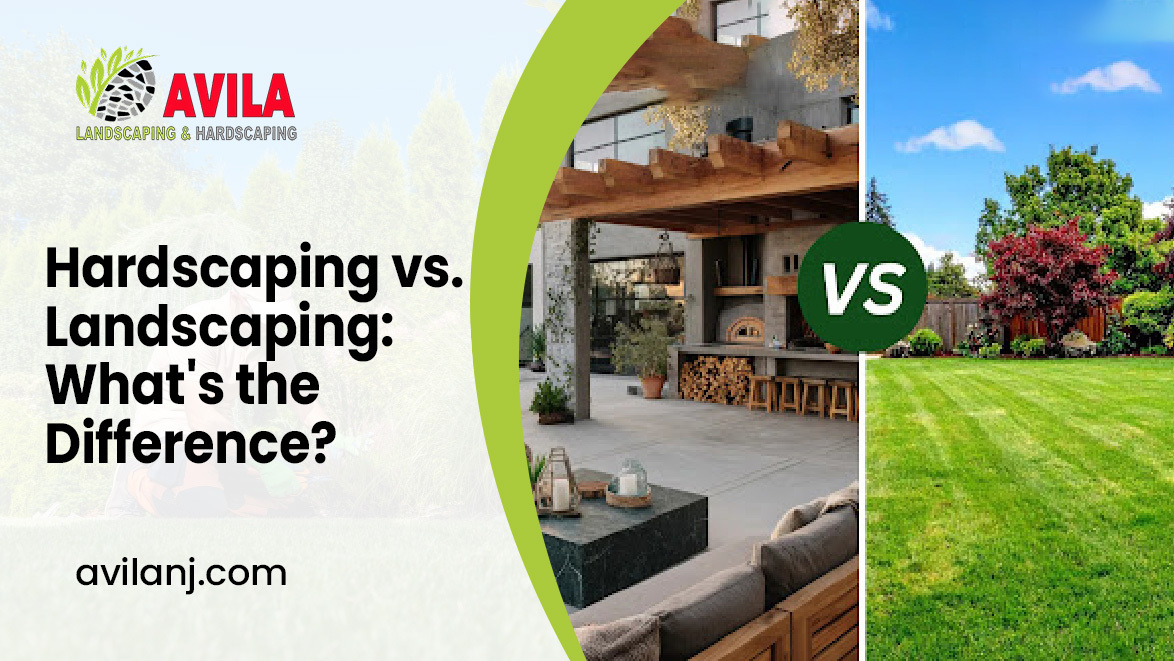
Have you ever walked out the back door of your house and looked at your yard? Maybe you see a massive patch of green grass but you have no flat place to set up a table. Or maybe you have a big patio space but the yard feels cold because it has no trees or bright flowers.
To make your yard look great, you must learn the true difference between hardscaping and landscaping. Many people think these words mean the same thing. They do not. They are different components of landscape design. If you get them mixed up, you might plan your project backward. That can cause you to waste cash or end up with a messy yard. Let us look at how these two parts work together to create a beautiful outdoor space.
Key Takeaways
- Learning the difference between hardscaping and landscaping helps you sketch out a smart plan for your home.
- Hardscaping means all the hard, non-living things like stone patios, brick paths, wood decks and concrete walls.
- Landscaping covers all the living, green things like flower beds, bushes, trees and fresh grass sod.
- A good yard combines both to control heavy rainwater and stop topsoil from washing away into loose mud.
- The solid stone pieces build the permanent shape of your yard while the plants add color and soft texture.
Understanding Hardscaping
When you look at a professional backyard, the hardscaping is the tough part. They form the solid base of the entire space. Hardscaping is a broad term. It includes anything in your yard that is man-made, non-living and solid. Think of hardscaping as the permanent skeleton of your outdoor room. These pieces never grow taller, they do not change with the weather and you never have to water them to keep them alive. Instead, they give your land a flat floor and clean borders.
To build these features, work crews use heavy raw materials. This means things like natural stone, brick pavers, poured concrete slabs, loose gravel and thick wood beams. Hardscaping is highly useful. It creates clean, mud-free zones where your family can sit, walk and cook meals. Without these solid pieces, your backyard would be nothing but a wild patch of open dirt. It would turn into a total swamp every single time a rainstorm hit your neighborhood.
Beyond looks, hardscaping handles major safety jobs for your property. For example, if your house sits on a steep hill, a heavy stone retaining wall locks the sliding soil back in place. That keeps your yard from washing away. Concrete paths guide footsteps safely across your lawn so people do not trample your delicate grass. Because these projects involve heavy stone blocks and deep digging, crews use tractors and leveling tools to keep everything straight for years.
Landscaping Explained
Now, let us step off the stone patio and look at the living environment right next to it. While the word landscaping can mean everything outside your home walls, the true heart of it relies on living, growing things. Landscaping is the art of arranging plants, soil and grass to create natural beauty, rich color and soft textures across your property.
This living side of your yard features elements like rolled-out grass sod, flower gardens, mulch beds, privacy hedges and shade trees. Unlike stiff stone walls, these green features are constantly shifting. They grow taller, bloom with flowers and change colors as the seasons pass. This natural movement softens the sharp, boxy lines of your home’s foundation and makes the whole outdoor area feel cozy and alive.
Investing in high-quality plants can greatly improve your daily comfort. A thick, healthy lawn lowers the air temperature around your house on hot summer days. It acts like a natural air conditioner. Big trees block cold winter winds while deep plant roots hold onto the dirt like a tight net to stop erosion. But because these soft features are alive, they require regular weekly care like mowing, pulling weeds and pruning to keep them from turning into a wild jungle.
Comparing the Two Design Elements
To help you see how these two styles split up your property layout, check out this simple guide. It shows exactly how the hard structures and the green features balance each other out.
| Design Feature | Hardscaping (The Bones) | Landscaping / Softscaping (The Beauty) |
| Is It Alive? | Completely non-living, built structures | Alive, growing and changing plants |
| Materials Used | Stone, concrete, brick, gravel, wood pavers | Grass sod, flowers, bushes, mulch, trees |
| Main Job | Forms flat floors, sets borders, holds back dirt | Adds bright color, softens stone, gives shade |
| Water Needs | Needs zero water (built to shed rain away) | Requires regular watering and good soil |
| Daily Upkeep | Power washing, sweeping, sealing stone joints | Mowing grass, pulling weeds, trimming limbs |
| Can You Move It? | Permanent and very hard to change later | Easy to dig up, replant or move each spring |
Key Differences Between Hardscaping and Landscaping
To get a handle on your next big backyard remodel, you need to know where these two project types separate. The true difference between the two comes down to five basic things: texture, water management, installation order, upkeep and lifespan.
1. Material Texture and Overall Feel
Hardscaping features are rigid, solid and cold to the touch. They use sharp, clean lines and geometric shapes to form hard borders around your lawn. They rely on heavy blocks, flat bricks and thick wood timbers to give your property an organized look.
Landscaping elements bring soft, organic textures into play. The gentle rustle of leaves in the wind, the soft feel of grass under your bare feet and the bright petals on a flower bush break up the harsh look of cold stone walls and heavy concrete slabs.
2. Water Management and Absorption
The way these two styles deal with heavy rain is completely opposite which is why your property needs a mix of both to stay safe from flooding. Hardscaping elements are solid and non-porous, meaning they are built to shed water completely off their surface. If a stone patio is sloped incorrectly, it will trap pooling water and push it right against your home’s foundation.
Landscaping features act like a giant, natural sponge. Deep plant roots, loose soil and dark wood mulch actively drink up rainwater, filtering it safely back down into the earth before it can flood your local street gutters.
3. Installation Order and Timing
When a professional crew steps onto a property to do a complete makeover, they must always build the hardscaping features before a single flower seed goes into the ground. Heavy bobcats, excavators and dump trucks have to roll across the dirt to dig out foundations, pour wet concrete and drop off heavy pallets of stone.
If you roll out expensive grass sod or plant delicate flower beds first, the heavy construction equipment will crush them right into the mud. Once the heavy stone patios and retaining walls are locked in place, the landscaping team can come in to wrap beautiful plants around those solid stone borders.
4. Upkeep Habits and Daily Care
The type of work you have to do to keep these two zones looking good is totally different. Hardscaping upkeep is structural and usually only happens a couple of times a year. You might need to power wash mud off your stone walkways, sweep dead leaves off your deck or put a fresh coat of liquid sealer on your bricks to stop stain damage.
Landscaping upkeep is a continuous weekly chore that follows the cycle of nature. You have to cut the grass every weekend, pull aggressive weeds out of the dirt, spread fertilizer and chop back overgrown branches before they scrape against your roof shingles.
5. Long-term Lifespan and Flexibility
Hardscaping setups are built to stay exactly where you put them for decades. Once a concrete patio floor is poured or a heavy brick wall is stacked, moving it requires a ton of money, loud jackhammers and exhausting physical labor.
Landscaping is incredibly flexible and can be switched up whenever you get tired of the look of your yard. If you want a change, you can easily dig up an old flower bed and lay down fresh green grass sod over a single weekend without hurting the rest of your landscape design.
Conclusion
Finding the perfect balance between hardscaping and landscaping is the key to creating a beautiful, high-value yard your family can actually enjoy. The solid stones and retaining walls give your property its strength and usable shape while the colorful plants and vibrant green grass bring the whole space to life. But trying to figure out heavy tractor grading, stone paver alignment & plant choices all by yourself can quickly turn into a back-breaking layout nightmare. When you want to give your property an amazing makeover or need an expert crew to install durable patios and fresh sod, visit Avila Landscaping to book your free design estimate today.
FAQ
What happens if a yard has way too much hardscaping?
If you cover your entire yard in concrete pads & stone blocks, rainwater will have nowhere to sink into the ground. This causes massive pooling puddles, turns your property into a hot heat-trap during summer weeks and makes the house look cold and sterile.
Can hardscaping features stop mud from sliding down a hill?
Yes, putting in a heavy hardscaping feature like a stone retaining wall is the smartest way to fix a steep hill. The heavy interlocking blocks lock the sliding dirt back in place while hidden gravel pipes drain away the rainwater safely so you don’t get a sudden mudslide.
Is it cheaper to install soft plants or hard stone structures?
Soft landscaping like grass seed, mulch beds & small bushes is usually much cheaper upfront because it doesn’t require massive machinery. Hard structures like concrete patios and stone walkways cost more because the raw materials are heavy and it takes highly skilled labor to build them straight.
How do I use plants to make a stone patio look more natural?
You can plant soft creeping moss or tiny thyme plants in the small gaps between your stone pavers to break up the solid look of the stone. Surrounding the hard edges of your patio with colorful perennial flowers & short bushes also helps blend the stones right into the rest of your lawn.
Why is dirt grading important for both of these design styles?
Dirt grading makes sure the underlying soil slants safely away from your home’s foundation walls. This protects your permanent hardscaping blocks from shifting during heavy winter freezes and stops your soft landscaping flower beds from getting drowned in stagnant pools of water.