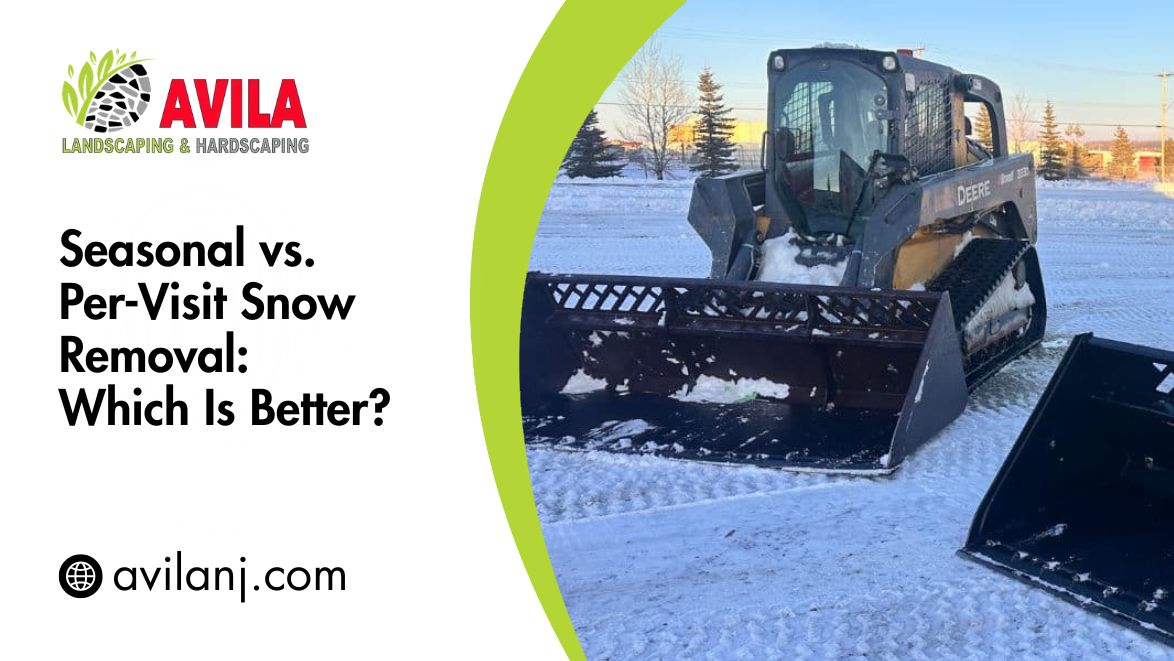
Seasonal snow removal works best for most commercial properties that need consistent winter coverage. You pay one fixed fee and know your cost up front. Per-visit snow removal is better for properties with light needs or a tight budget. You pay only when the crew works, but a snowy winter can cost far more than you planned. The right choice depends on your lot size, your traffic and how much risk you can handle. The sections below compare the two options so you can pick the one that fits.
Key Takeaways
- Choose seasonal snow removal if you want a fixed cost and reliable service all winter.
- Choose per-visit service if your property is small or your snow needs are limited.
- Compare seasonal vs per-visit snow removal by total winter cost, not by the price of a single visit.
- Read the contract for snowfall caps, triggers and extra charges before you sign.
- Ask how ice control and hauling are billed. They are often separate.
- Check insurance and cancellation terms with either option.
What Is the Difference Between Seasonal and Per-Visit Snow Removal?
Seasonal service covers the whole winter for one set price. Service charges are per visit, every time the crew comes out. The main differences are shown in this table.
| Feature | Seasonal Snow Removal | Per-Visit Snow Removal |
| Pricing | Fixed seasonal fee | Pay for each service visit |
| Budgeting | More predictable costs | Costs vary with snowfall |
| Service availability | Usually covered by a seasonal agreement | Depends on the service arrangement |
| Best for | Properties needing regular winter coverage | Properties with occasional snow removal needs |
| Heavy snowfall | Coverage depends on contract terms | Multiple visits may increase costs |
| Winter maintenance | Often includes ongoing service | Services are billed individually |
What Are the Benefits of Each Snow Removal Option?
Each has its merits. Here is what you gain with each one.
Benefits of Seasonal Snow Removal
- Predictable budget. One fee lets you plan the whole winter.
- Priority service. Contractors often serve seasonal clients first when storms hit.
- Protection from heavy winters. A big snow year does not raise your bill unless the contract has a cap.
- Less hassle. You do not need to call for each storm. The crew follows the agreed trigger.
- Simple billing. Payments are frequently divided into fixed payments.
- Stronger relationship. A crew that knows your property can work faster and avoid mistakes.
Benefits of Per-Visit Snow Removal
- Pay only for what you use. In a mild winter you may spend very little.
- Flexibility. You can change contractors from season to season or even storm to storm.
- Lower commitment. There is no long contract to sign in many cases.
- Good for low-risk sites. A small lot that rarely needs service may not justify a full season fee.
- Easy to test a new contractor. You can try a crew before you commit to more.
- Clear link between cost and work. Each invoice shows what was done on that day.
What Are the Drawbacks of Each Snow Removal Option?
Neither option is perfect. Look at the downsides before you decide.
Drawbacks of Seasonal Snow Removal
- You might pay too much in a mild winter. The fee remains fixed even if there are few storms.
- Caps and limits may apply. Some contracts charge extra after a set amount of snowfall.
- Extras may not be included. Salt, hauling and sidewalk work may cost more.
- Cancellation can be hard. Some contracts lock you in for the full season.
- Upfront commitment. You agree to a price before you know how the winter will go.
- Service quality still varies. A fixed fee does not guarantee a good contractor, so check references.
Drawbacks of Per-Visit Snow Removal
- Costs can spike. A snowy winter with many storms can add up fast.
- Harder to budget. You cannot know the final bill until spring.
- Slower response in busy storms. Contractors may serve seasonal clients first.
- No guaranteed availability. The crew may be booked when you call.
- Repeat visits add up. Each return trip for cleanup may be billed again.
- Billing can be messy. Many invoices make it harder to track your total spend.
Which Snow Removal Option Is Better for Your Property?
The best choice depends on your property and your risk. Here is how it plays out in four common cases.
Commercial Properties With Large Parking Lots
Large lots need fast and reliable service. A blocked lot can close your business and raise your liability risk. Seasonal service usually fits best here because you get priority and a fixed cost. Make sure the contract covers salting, sidewalks and repeat visits.
Small Businesses and Low-Traffic Properties
A small lot with light traffic may not need service as often. Per-visit service can save money if storms are few. It also gives you room to switch contractors. Just be sure the company can reach you in time when a big storm hits.
Properties in Areas With Frequent Snowstorms
If your area gets snow often, seasonal service is usually the safer choice. The fixed fee protects you from a run of storms. It also keeps your place on the service schedule. Check the snowfall cap, since a very heavy year may trigger extra charges.
Businesses With Limited Winter Maintenance Budgets
A fixed seasonal fee can help if you need a clear budget number. Per-visit pricing can also work if you can absorb a surprise bill. Ask each contractor for an example of what you would pay in an average winter and a hard one. Then pick the one that matches your cash flow and your tolerance for risk.
What Should You Check Before Signing a Snow Removal Contract?
Either option can go wrong if the contract is vague. Check these four items first.
Services Included in the Agreement
List what is covered. Does it include plowing, sidewalks, salting and cleanup visits? Are hand work and edge clearing part of the price? Ask for a line-by-line list so there are no surprises. A low price that leaves out walks and salt is not really low.
Snowfall Triggers and Service Response Times
The trigger is the snow depth that sends the crew out, such as two inches. Ask what it is and who decides. Put response times in writing. For example, ask how soon the crew will arrive after the trigger and when the lot will be clear. Ask what happens if the company misses its window.
Extra Charges for Ice Control and Snow Hauling
Ice control and hauling are often billed on top of plowing. Ask whether salt is included or charged per application. Ask how hauling is priced and how fast it can start. Find out about fees for after-hours work or repeat visits. These extras can change which option is cheaper.
Insurance, Liability, and Cancellation Terms
Ask for a certificate of insurance that shows general liability and workers’ compensation. Ask whether you can be named as an additional insured. Read the cancellation terms so you know how to exit if service is poor. Talk to your attorney about liability for slips and falls on your property, and confirm local sidewalk and ice rules with your municipality.
Conclusion
Seasonal vs per-visit snow removal comes down to risk, budget and how much service your property needs. Seasonal service gives you a fixed cost and priority in a storm. Per-visit service gives you flexibility and lower cost in a mild winter. Large lots and snowy areas usually do better with a season contract. Small and low-traffic sites may do well with per-visit pricing. Whichever you choose, read the contract and check insurance and extras before you sign.
If you are ready to plan for winter, talk to Avila Landscaping. We can review your property and explain your options in a clear written proposal.