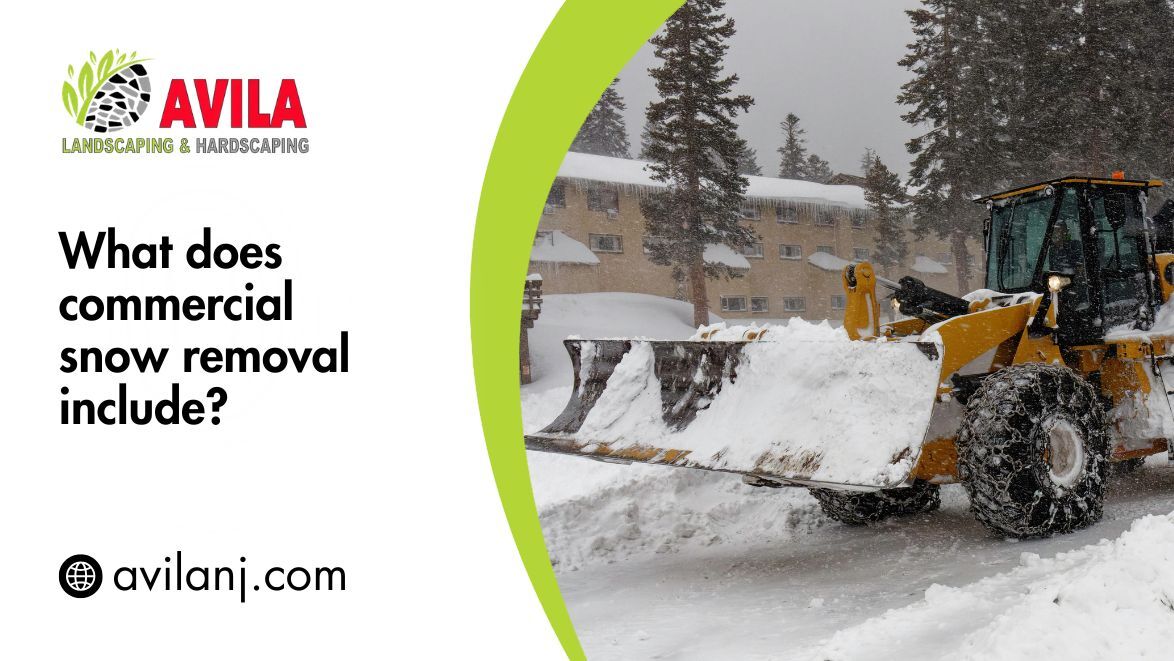
Commercial snow removal usually includes parking lot plowing, sidewalk clearing, de-icing, snow stacking, hauling, and storm monitoring. The exact service depends on your property layout, operating hours, and contract terms. A busy retail center may need frequent access checks during snowfall.
Meanwhile, an office property may focus more on morning parking and entrances. Reliable commercial snow removal services help keep vehicles moving and walking areas usable throughout winter. They also help prevent large snow piles from blocking valuable space during repeated winter storms.
Key Takeaways
|
What Does a Complete Commercial Snow Service Cover?
A full commercial service usually combines several winter maintenance tasks. Plowing handles large paved areas while crews clear smaller pedestrian routes. De-icing controls slippery surfaces that remain after snow moves away. Snow piles may need stacking or hauling as storms continue. Weather monitoring connects these tasks because timing shapes overall accessibility.
Different properties also create different priorities during winter weather. Retail sites often need parking and customer walkways cleared together. Offices may focus heavily on morning access and building entrances. Your plan should reflect how people actually use the property.
Parking Lot Plowing
Parking lots usually demand the largest share of snow-clearing work. Plowing opens driving lanes and helps customers, employees, and vendors reach buildings. Crews may also work around parked vehicles, islands, curbs, and landscaped edges. That makes a clear site plan useful before winter starts.
Snow placement matters almost as much as clearing the pavement. Pushing everything toward the nearest open corner can create problems later. Large piles may reduce parking capacity or block driver sightlines. They can also send meltwater toward busy areas when temperatures rise. A better plan identifies suitable stacking areas before storms begin.
Longer storms may require more than one round of plowing. Waiting until snowfall ends can leave heavy accumulation across the property. In active commercial areas, staged clearing can help maintain basic access. Exact timing should match snowfall levels, business hours, and contract expectations.
Sidewalk and Entryway Clearing
Pedestrian areas need a different approach than broad parking surfaces. Sidewalks, walkways, entrances, and building approaches often require smaller equipment or hand clearing. These spaces also receive concentrated foot traffic throughout busy periods. Even narrow strips of packed snow can become slippery quickly.
Entrances deserve special attention because people track moisture indoors. Snow near doorways can melt during the day then freeze later. Shaded walkways may also stay colder than nearby open pavement. Thorough clearing makes these routes easier to navigate during winter weather.
You should identify which pedestrian routes matter most beforehand. Some properties have several doors though only two receive regular traffic. Others connect parking areas through multiple walkways and entrance points. Knowing those patterns helps crews focus on the routes people actually use.
De-Icing and Salting
Plowing removes accumulation though it doesn’t always remove every icy patch. Thin layers can remain on pavement after equipment passes. Refreezing may also happen when daytime melting meets colder evening temperatures. De-icing treatments help manage those changing surface conditions more effectively.
Higher-risk areas often include entrances, walkways, shaded pavement, and sloped sections. Parking spaces near drainage paths may also become slick after melting snow moves across them. Applying salt or another suitable treatment can improve traction and limit ice buildup.
However, material use should still match surface conditions and weather. More product isn’t automatically better for every winter surface. Temperature, moisture, pavement type, and timing can all affect performance. A thoughtful approach targets problem areas instead of spreading material without clear purpose.
Snow Stacking and Hauling
Every storm leaves one practical question: where should the snow go? Small events may leave enough room for on-site stacking. Repeated storms can quickly turn those piles into valuable lost space. Parking lots then become tighter even after crews clear the pavement.
Good stacking locations should protect normal traffic patterns and property access. Piles shouldn’t block entrances, driver visibility, key walking routes, or drainage areas. They also shouldn’t consume more parking than necessary. Planning these locations early gives crews clear direction during active snowfall.
Sometimes stacking no longer solves the growing space problem. Large piles may need relocation elsewhere on the property. When usable space becomes limited, off-site hauling may become necessary. Removing excess accumulation can restore parking capacity and improve movement around busy sites.
24/7 Storm Monitoring
Commercial snow management starts before a plow reaches the property. Storm monitoring helps crews follow changing forecasts, snowfall timing, temperature shifts, and possible refreezing. That information supports better decisions about when clearing or treatment may become necessary.
Winter weather can change quickly across New Jersey communities. A forecasted snow event may mix with sleet or freezing rain. Temperatures may rise during daylight then fall sharply overnight. Monitoring these changes helps crews prepare instead of reacting after problems grow.
For property managers, this preparation can reduce last-minute uncertainty. You already know who is watching conditions and what your agreement covers. That becomes useful during overnight storms when businesses need usable parking and entrances early.
Where Should Snow Be Placed on a Commercial Property?
Snow piles need thoughtful placement because they keep changing after stacking. Sunlight can melt one side while shaded areas remain frozen. Meltwater may travel toward drains, sidewalks, or low spots. When temperatures fall again, that water can create fresh ice.
Choose areas that preserve parking and normal vehicle movement. Keep visibility around exits and internal intersections in mind. Avoid blocking important pedestrian connections whenever possible. Drainage deserves attention because piles near low areas can complicate meltwater flow.
If storage areas fill after repeated storms, hauling may become necessary. Planning that possibility early prevents large piles from slowly consuming useful parking and access space.
What Happens During a Long or Heavy Storm?
A long storm often requires more planning than one final cleanup. As snow keeps falling, access needs can change throughout the day. Businesses may still receive employees, customers, deliveries, or service vehicles during the event.
Crews may focus first on basic driving and walking routes. Later passes can widen cleared areas as snowfall begins slowing. Ice treatment may follow where surface conditions call for it. Snow piles also need attention because early stacking areas can fill quickly.
What Should a Commercial Snow Removal Agreement Cover?
A clear agreement removes many winter surprises before they happen. It should identify which surfaces receive service and when work begins. Ask whether sidewalks, entrances, de-icing, stacking, hauling, and monitoring appear within the agreed scope.
Before signing, discuss property priorities using practical everyday details. Explain opening hours, customer traffic, employee access, and especially busy entrances. Also identify preferred stacking areas and sections that must remain usable. Better site planning usually makes winter coordination much easier.
Consider confirming these details:
- Areas included in plowing and clearing
- Sidewalks and entrances covered by service
- De-icing or salting procedures
- Snow stacking locations
- Conditions that may require hauling
- Storm monitoring and response expectations
- Service timing during longer weather events
- Any additional charges outside the standard agreement
How Should Businesses Prepare Before Snow Season?
A little preparation can prevent plenty of confusion during the first storm. Walk the property before winter and identify curbs, islands, drains, entrances, and possible snow-storage areas. Hidden obstacles become much harder to spot after several inches accumulate.
Next, think about how people use the property each day. Mark busy doors, common walking routes, employee parking, and customer access points. Share operating hours as well. Those details help create a plan that supports real activity instead of treating every area equally.
Finally, review the service agreement before winter weather arrives. Make sure everyone understands stacking areas, de-icing expectations, and hauling conditions. When responsibilities remain clear, property managers can respond faster without scrambling through paperwork during active snowfall.
Conclusion
Commercial snow removal usually combines plowing, pedestrian clearing, de-icing, snow management, and weather monitoring. Together, these services help commercial properties remain accessible through changing winter conditions. The right plan should match your parking layout, entrances, traffic patterns, and operating hours.
Snow stacking also matters because repeated storms can quickly consume usable space. Before winter, review exactly what your service agreement covers and identify priority areas. Clear expectations make storm response easier for everyone involved. A planned approach also makes winter property management far less stressful.
If your Jackson or Freehold property needs dependable winter support, contact Avila for commercial snow removal tailored to your site.